
In our compound, growing up as a girl felt like living with a secret expiration date. The moment your body showed the first soft signs of womanhood, the older women stepped in.
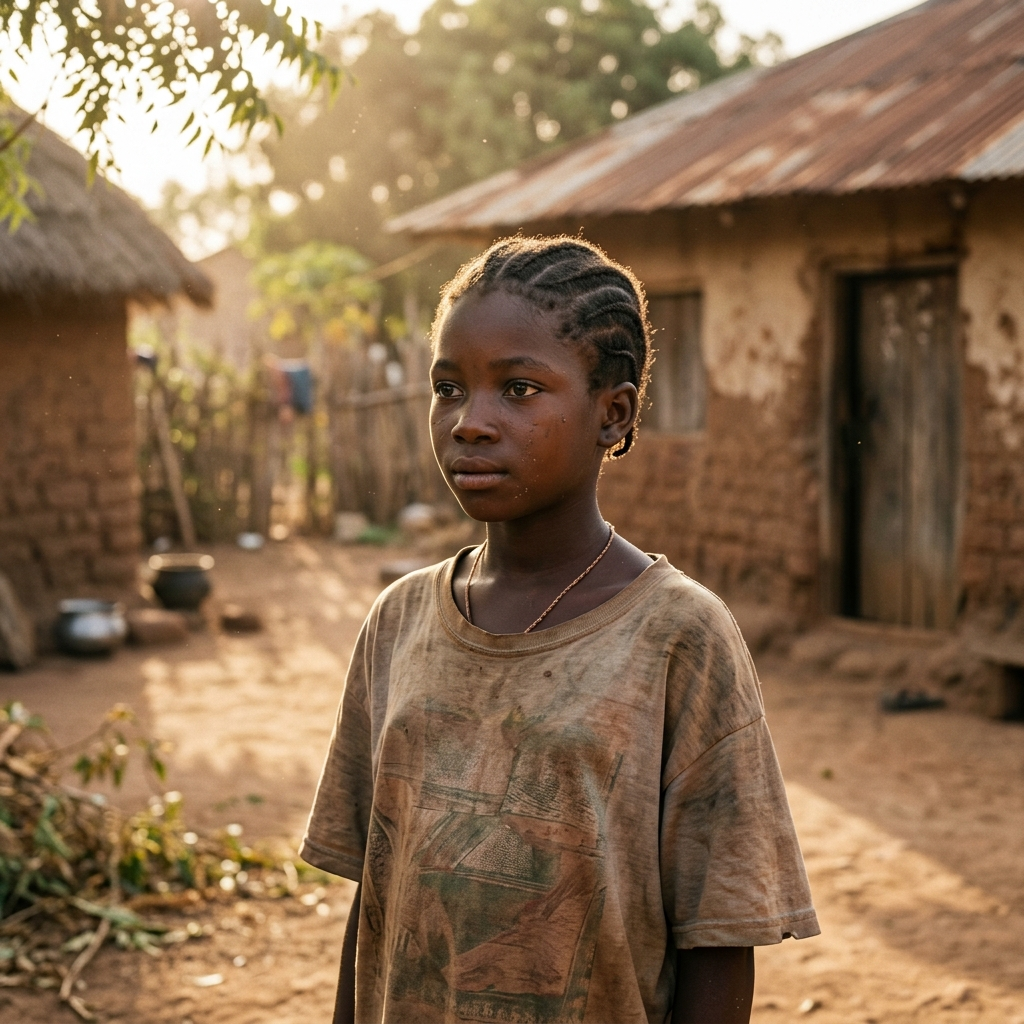
They called it “the flattening.” It didn’t matter if you were ten, eleven, or twelve years old. As soon as your chest began to develop, you were readied for the sizzling stones.
For a long time, I thought this was just something every girl on earth went through. I assumed it was a painful rite of passage, like losing baby teeth or getting your ears pierced.
Then I turned eleven, and I watched my sister Adana scream for three hours straight.
The Sizzling Stones on the Hearth
I can still close my eyes and hear the fire crackling in the center of the yard. My grandmother placed the heavy grinding stones directly onto the glowing coals until they turned dark red.
She wrapped them in a thin scrap of cloth that did almost nothing to block the heat.
My mother held Adana’s shoulders down against the woven mat while my grandmother pressed the burning weight into her skin.
“It’s for your own good,” my grandmother kept chanting over my sister’s cries. “It keeps the men away. It lets you finish school. It keeps you safe.”
I stood in the shadows of the doorway, clutching the wooden frame. I was only eleven, but I wasn’t blind. I saw the silent tears streaming down my mother’s face as she pinned her own daughter to the floor.
She didn’t want to do it. But fear and tradition held the rope that tied her hands.
Whispers in the Dark Compound
After that night, the young girls in the compound spoke in terrified whispers whenever the adults were asleep.
Some swore that drinking bitter herbal teas would stop your body from growing. Others said sleeping flat on your stomach helped keep your chest small.
My best friend, Essie, had already been forced through the ritual twice because her body kept developing anyway. Her mother called her stubborn, as if her biology was throwing a tantrum.
I knew my turn was coming, so I started fighting back in secret.
- I wore my father’s old farming shirts—three sizes too big.
- I bound my chest tightly with long strips of torn fabric.
- I hunched my shoulders forward whenever I walked past the elders.
- I stopped playing football with the boys because running made the change obvious.
Every morning, I woke up before dawn and checked my reflection in the small glass mirror. Every morning, I prayed that my body had listened to my fear.
“We Will Take Care of You Tomorrow”
Bodies do not listen to hope. By the time I turned twelve, the loose shirts could no longer hide the truth.
My grandmother started watching me differently. She measured my frame with cold, calculating eyes every time I walked into the kitchen.
One hot morning, while I was rinsing dishes at the water tub, her hand shot out and gripped my wrist. Her skin felt like dry leather.
“Tomorrow,” she whispered softly, so my mother wouldn’t hear. “We will take care of you before it gets worse. Before the men start noticing.”
The Smell of Burning Butter
I couldn’t sleep a single wink that night. The next morning, I doubled over on the floor, groaning and pretending to have violent stomach cramps.
My grandmother didn’t even pause. She had seen every trick in the book over forty years.
She simply rekindled the hearth fire and placed the heavy stones on the coals while my mother turned her face toward the wall.
I tried to run, but where do you run when your entire world is contained inside one walled compound? My uncles blocked the gate without even realizing what they were doing.
The first press is something you never forget as long as you live.
It is the smell of burning flesh mixed with cheap shea butter. It is a sound bursting from your throat that you didn’t know a human voice could make.
Your vision flashes white, then pitch black, then white again.
They worked systematically—first one side, then the other—like they were ironing stubborn wrinkles out of a school uniform. My mother held my shaking hands, whispering over and over that I was brave, that it would be over soon, that one day I would understand.
Biology Fights Back
For weeks after that morning, I couldn’t lift my arms above my waist. I couldn’t lie on my stomach, nor could I sleep on my back.
Every tiny breath felt like a hot needle sliding between my ribs.
My grandmother applied honey and wild herbs twice a day, checking the raw wounds for infection with immense pride.
“Look at her,” she boasted to my mother one evening. “Flat as a boy now. She is safe.”
However, three months later, my body fought back. The tissue began growing again, refusing to be crushed out of existence.
When my grandmother noticed, her face turned dark with rage. She accused me of eating too much meat and drinking too much milk. She claimed I was inviting trouble into the family.
She immediately set a date for a second session. This time, she wasn’t using the grinding stone. She was heating a heavy wooden yam pestle over the fire until it steamed.
Knowing the exact pain that was coming was ten times worse than the first time.
The Teacher from the City
My salvation arrived in the form of Miss Akosua, the new health teacher assigned to our village school.
She was from the capital city. She wore tailored suits, spoke with crisp confidence, and had studied abroad.
During a Friday afternoon lesson on human growth, she said a sentence that made my heart stop dead in my chest.
“In some places,” Miss Akosua said, looking around the room, “people hurt young girls’ bodies to try and control them. But your body belongs to you alone. No one has the right to burn it.”
I stayed behind after the final bell rang. I waited until every single student packed their bags and walked out the door.
I stepped up to her desk, my hands shaking inside my oversized sleeves.
“Do you know about the flattening?” I whispered.
Miss Akosua stopped writing. She looked at me for a long, heavy moment, then walked over and locked the wooden classroom door.
“Sit down,” she said gently. “Tell me everything.”
The Truth Behind the Tradition
I told her everything. I told her about the glowing stones, the steaming wooden pestle, the unbearable heat, and my grandmother’s cold pride.
I told her about my mother’s silent tears and my best friend Essie, who had been flattened six times until her chest was covered in thick, dark scars.
Miss Akosua didn’t look angry; she looked heartbroken. She pulled out her phone and showed me articles, legal documents, and medical diagrams.
She taught me words I had never heard in my village:
- Child Abuse: Inflicting physical harm on a minor under the guise of discipline or tradition.
- Tissue Destruction: Permanent damage to underlying glands and muscles.
- Infection Risks: Dangerous complications arising from untreated open burns.
“They tell you it is protection,” Miss Akosua said, sliding a small paper pamphlet into my notebook. “But protection that requires torturing a child is not protection. It is just fear wrapped in tradition.”
The End of the Fires
The next morning arrived cold and gray. In the courtyard, my grandmother was already fanning the coals, heating the heavy wooden pestle until the air above it shivered with heat.
My mother stood beside her, holding a jar of fresh shea butter, her shoulders slouched in defeat.
Suddenly, a loud engine echoed outside our compound. A white government vehicle pulled up to the main gate, kicking up dust.
Miss Akosua stepped out first, followed by two regional child protection officers and an armed local magistrate.
My grandmother stepped forward, shouting about family honor, village rights, and ancient customs. But the magistrate simply held up a signed legal warrant.
They knew the law. They knew our rights.
The officers examined my healing wounds, documented every scar on my body, and took formal statements from my mother and my grandmother. They made it crystal clear that if anyone touched me or any other girl in the compound again, they would face years in prison.
My grandmother sat down on her wooden stool, staring at the cooling coals in disbelief. The fire was out.
That morning, the stones lost their power. Not just for me, but for my sister Adana, for my friend Essie, and for every young girl who will ever be born into our family.